




For many immigrant students at Skyline College, immigration is not just an act of resilience, but a means of survival.
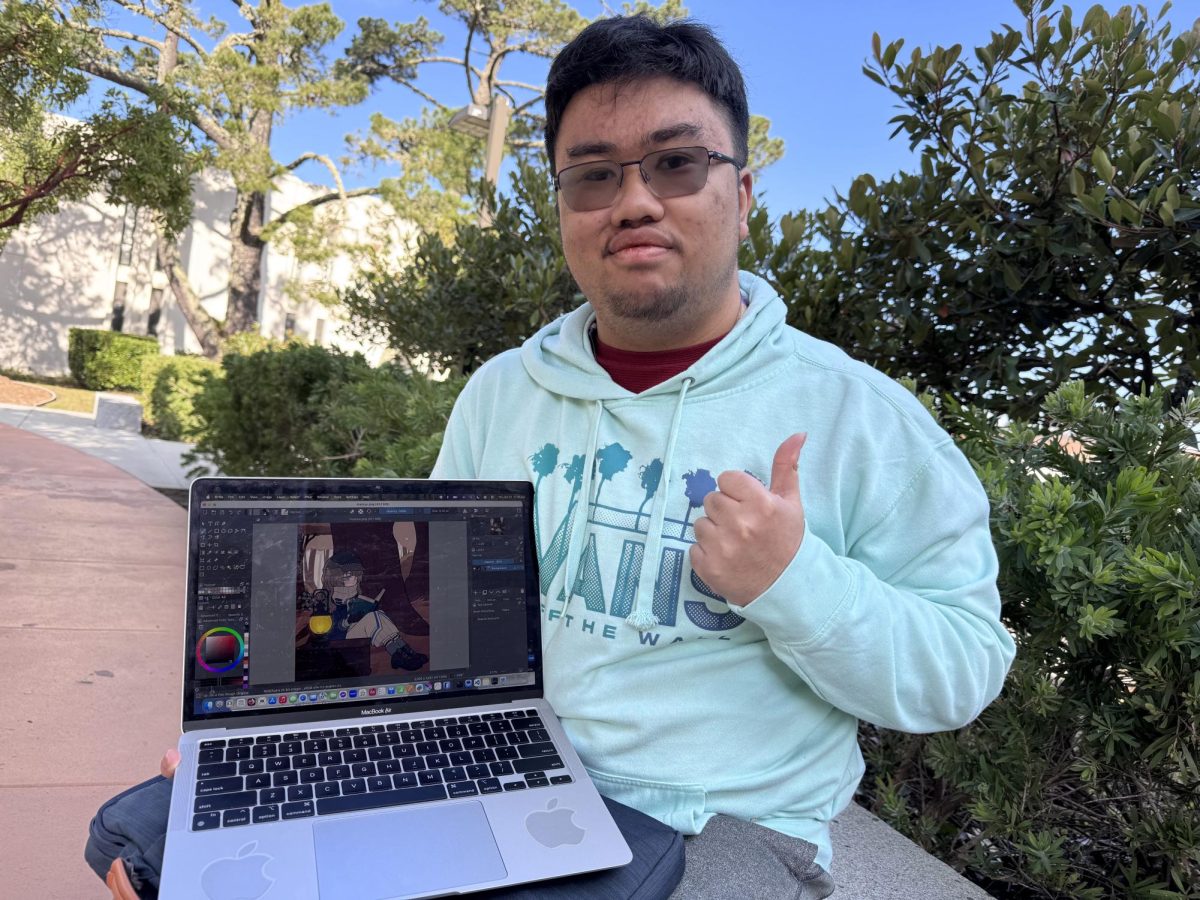
“If we go back, especially with our background of organizing for our rights, for human rights in Burma, we could literally be arrested or worse, killed. We cannot go back home, and we are not welcome here,” said Martin Tun, a Skyline student.
Tun immigrated to the U.S. as an international student from Myanmar (formerly known as Burma). He reflected on how the current increase in federal immigration enforcement has led to heightened unease and fear around being an immigrant right now in America.
Student refugees from Myanmar are not the only community at Skyline feeling the impact of escalated immigration enforcement. Undocumented students are faced with a similar intersection of challenges and concerns.
Over the summer, the expansion of immigration enforcement was catalyzed when Congress signed the “One Big Beautiful Bill” into Law. This bill allocates $170.7 billion to immigration enforcement. It also enables authorization of more detentions and immigration related arrests, expanding upon and building new detention facilities across the country, and expediting ICE (Immigration and Customs Enforcement) capacity for immigration enforcement.
Alexa Moore, a student at Skyline College who is part of the Unlocking Futures Fellowship in the Undocumented Community Center (UCC), shared how fear for safety can make it hard to prioritize school.
“When it comes to the Trump administration, it’s very difficult for students to focus on trying to pursue higher education when thinking of ‘if I go to school, something might happen to me in school,” Moore said. “Something might happen to me in public.’ If I were to be detained, that’s a waste of my time just to be sent back.”
Rebecca Pwint, who came to Skyline College as an international student, reflected on connections she has seen between her experience in Myanmar and now as a resident in the U.S.
“Before, people would be very excited to get their court dates for interviews and stuff. Now everyone is scared because of ICE detaining outside of the courtrooms,” Pwint said. “It’s like reliving the days in Burma, but I would say with more advanced technology…they are tracking your phone, they know where you are, you feel like you are watched all the time.”
In addition to safety concerns, immigrant students at Skyline also shared about the sacrifices their families are facing.
Moore explained she is now in a position to transfer to a university, and with that comes further financial strain on her family.
“What’s the point in doing all of this? When something might happen to me or my family, and then we might end up having to go back?” said Moore. “I don’t want it to be a waste of my parents’ time coming here.”
Pwint shared a similar sentiment to Moore on parents sacrificing their time and resources.
“They have to sell their properties and jewelry to support us, and that burden is so heavy that you can’t help but sometimes feel helpless,” Pwint said.
Pwint explained how she feels there is more context needed to understand the experience of student immigrants from Myanmar.
“For us, I feel like there is another layer to being an immigrant, which is the [military] coup back home…I also came as an international student, having to pay about $8,000 a semester, when you know your family cannot afford it.” Pwint said, “But you are also forced to flee here because of the conscription law back home; with the coup, they will start killing you.
Pwint explained how the financial strain on families adds more pressure to the experience.
“So you can’t help but feel like a burden to your family because it’s a financial burden that they also have to endure that they’re not capable of, to be honest,” said Pwint.
The military coup in Myanmar started in 2021 when the democratically elected government was overthrown and taken over by the military. This coup was opposed by civilians and led to armed resistance to martial law.
Three years into the military coup, a conscription law was formally announced, endangering youth in the country. Although the law states that only people between 18-35 years of age will be drafted, according to Human Rights Watch, military recruiters have been kidnapping and forcing children to become soldiers.
“The conscription law was announced by the military regime in February 2024; rather than just conscription or military drafting, it was more of a forced kidnapping law.” Tun said, “This is the same military regime that almost the entirety of the Burmese population opposed, that we did not vote for.”
Tun explained that the conscription law was declared by the military regime in Feb. 2024. He shared that instead of just military drafting, the law induced kidnapping and killing.
“They overthrew our elected government, and when we peacefully protested, they did not just crack down on the protestors, but thousands were shot to death. Thousands of peaceful protesters were killed by them, and that’s the same military that is now asking us to serve in the military in turn to kill our own people,” Tun said.
Tun said how, upon coming to America, he saw a connection between the manner in which ICE is detaining people and the regime in Myanmar, in regards to forcibly taking people without regard for the age specified in the conscription law.
“In practice, it is similar to what ICE is doing. They don’t really care if you look like a youth, even if you are 16, they might just drag you, and the next thing you know, your child is just lost,” Tun said.

Skyline College offers support and community for immigrant students at Skyline. One of those resources for students is the UCC.
Fernanda Castorena, the program services coordinator at the UCC, shared that the UCC is a place where students can find academic support, legal counseling, and resources specifically for undocumented students.
“This work is really personal to me because I was… an undocumented community college student myself, and so this work is really personal to me,” Castorena said.
Castorena talked about how she is dedicated to providing her students with the best resources and support that she can.
“I think each time that I meet with students, I carry that understanding and that empathy into the things that are currently affecting us, and so because of that, I try to make sure that everything that I am providing students with is the most accurate up-to-date information,” Castorena said.
Aaron Torres Mendoza, a student a part of the Unlocking Futures Fellowship in the UCC shared how the resources he has found at Skyline have allowed him to continue as a college student.
“Without those resources, I don’t think I would still be here continuing to seek my higher education,” Torres Mendoza said.
Torres Mendoza explained that while there are resources available at Skyline for undocumented students, there is room for more support, especially when it comes to financial aid and scholarship opportunities.
“I see my citizen peers getting access to scholarships that give them thousands of dollars per semester or internships that pay them better hourly wages while they’re continuing in school. Not much of that is given to undocumented students,” Torres Mendoza said. “For me, I’m lucky to even find a scholarship that’s a couple of hundred dollars.”
Torres Mendoza also said that in the Stem Center, there is a wall of flyers with scholarship opportunities, most of which are not available to undocumented students. He shared that a separate section with opportunities accessible to undocumented students would be helpful.
In addition, Pwint said she would like to see a plan of action for students with vulnerable citizenship status to feel safe at Skyline.
Pwint mentioned how there are drills to prepare students for a variety of emergencies such as school shootings, and that ICE presence at school should be included on the list.
“I would like to see a more concrete stance and plans, if we can do drills, and a better way to communicate, rather than just text messages where there is no signal,” Pwint said. “Concrete steps would bring more comfort for us to be on campus.”

Tun and Pwint have been able to find community at Skyline through being a part of the Myanmar Student Union (MSU).
“I was able to go to my first meeting and learn more about it and find my hope. I felt so guilty about leaving the country and leaving my comrades behind,” Pwint said.
The MSU is a political organization that advocates and provides a community for Burmese students at Skyline. Over the years, the MSU has organized fundraisers for humanitarian aid in Myanmar, art builds, cultural festivals, carnivals, panels, a political play, and much more.
“I feel comfort in it [MSU], the support and the community here, and other people also fighting for national liberation, people who really listen to you and understand you. It’s not home, but it feels like home,” Pwint shared.
Tun adds to the importance of camaraderie among immigrants and students at this time, reflecting on the important role immigrants have always played in America.
“This whole country is built on the backs of immigrant labor, and that is the power we as immigrants have and need to realize,” Tun said.
Lastly, he noted that collective action is the strongest solution.
“The fact that there are so few of them, as in the billionaires and the rich few who are making all these oppressive policies upon the people,” Tun said. “We have so many of us, as long as you don’t see it as an individual problem and instead as a societal problem, a problem for all of us… We are definitely stronger.”