
Skyline College’s Pilipino Cultural Night (PCN) is an annual student-led and student-directed play, written during the fall semester and shared to audiences in the spring semester. Students writing the script are enrolled in English 103, “Applied English Skills for Cultural Production I,” reading and evaluating cultural literary text and work collaboratively to write a script to celebrate the Filipino and Filipino American experience.
Students that are a part of the PCN script writing team are Francesca Mecano, Jenna Tolentino, Carlo Cortez, and Jerrick Molejona. Whilst the play wouldn’t be revealed till Spring 2026, the students shared their experiences of being a part of this class and what they wished this play could achieve by sharing it with fellow students and outside audiences alike.
When asked about the moral of the story, Tolentino — who communicates and gives the spotlight to her peers, said that, although deep, it was a hard thing to conceptualize and translate into a play because there are so many things that you have to actually address.
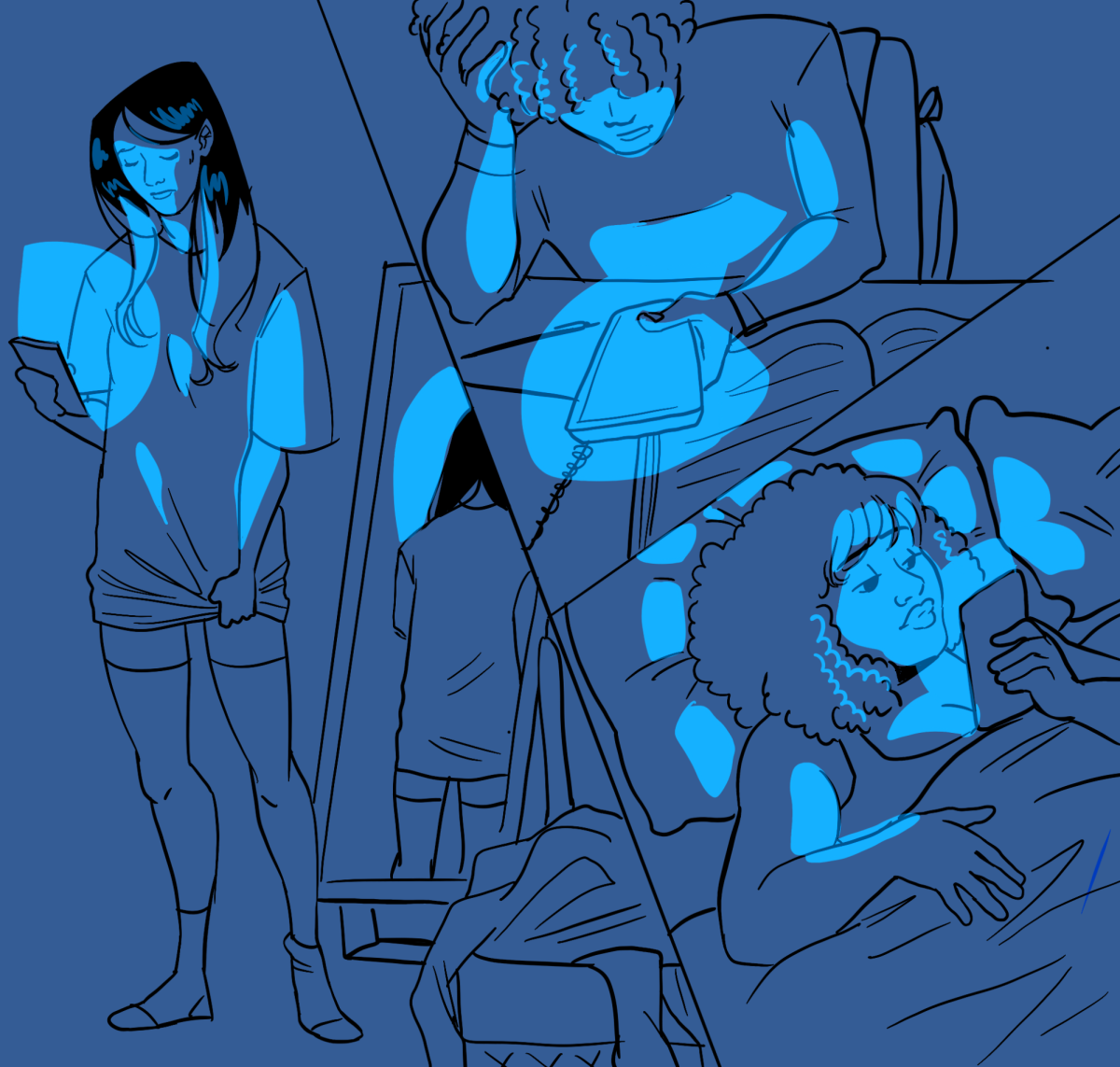
“Our main character has a dual lifestyle. She has her own identity that she wants to follow, her own passion in photography and her fathers passion,” Tolentino said. “‘What would make her family proud?’”
She said that it might disappoint people or make some disagree, but at the end of the day, if it’s for you, you’re going to do something great with it.
“Hopefully what people see is that you’re allowed to follow your own footsteps and make your own path,” Tolentino said.
Cortez said he thinks the story is an emphasis on the value of family bonds, not just the connection but being able to understand your family.
“Making an effort to understand even when there are complications,” Cortez said. “I feel like that’s [the] kind of story that a lot of people can relate to.”
When asked about what PCN is for them, Tolentino said she thought that PCN was an excuse for Filipinos to sing and dance more due to how many are singers at heart. However, she also shared that due to how many misconceptions there are against Filipino culture, being stereotyped as toxic and dramatic, it’s easier to show others their culture with the play.
“A lot of the time, we don’t communicate well, and so I think the best way to communicate our experiences as Filipinos — our struggles here in America and our struggles within our family and just in society in general — is by acting it out and actually showing it to people so they can visualize it,” Tolentino said.
Mecano, planning to be a dance choreographer, said that PCN is where people from different cultures come together.
“Being in this culture, PCN often involves cultural education. Living within the Filipino culture most of the time and just putting what you can put onto the table… in my opinion, [it is] very self-reflective… educational [and also] very good for your well-being,” Mecano said. “We always make sure that it [has] a significant role in how people shape Filipino identity, how people shape Asian American identity, what it’s like being in this culture.”
Cortez said something similar to Mecano, stating that PCN is a way to share Filipino culture.
“PCN became a tradition that started and continued on over time, but it’s meant to be the pride of what Filipinos are,” Cortez said.
Mecano said her favorite part of being in PCN is that it’s not only a way to create characters but to experience what it’s like to be a different kind of person. She thinks that, though the ideals are different from hers, it makes a very reflective experience, and makes her open-minded.
“The [characters] that we’re creating are definitely people I don’t resonate with, but it’s given me a bigger perspective on how some people’s ideals may be different from mine,” Mecano said.
Similarly, Molejona expressed the positive effects of being a part of the community.
“I say PCN and the Skyline Kababayan Learning [Community, whether] you’re Filipino or not, [you] find out who you truly are,” Molejona said.
Contrary to Mecano and Molejona, Tolentino said her favorite part of PCN is at the end of every class meeting where they would circle up, although cliche.
“It’s called Isang Bagsak and basically, it’s related to the farm worker back then… when the Hispanics and the Filipinos were struggling. In order to communicate [to] each other, because there’s a language barrier, they would clap,” Tolentino said.
Tolentino said that the idea was if one person didn’t show up, what they are working on wouldn’t work because everyone has a part.
“Basically, if one falls we all fall, and that sense of unity, every single time it [fills] my heart because you can tell every single heart is working together as one and… at the end of the day, it’s a reminder to us that we’re all here together,” Tolentino said.
Likewise, Molejona, who is committed to being a writer in the team, said that his favorite moments were when brainstorming ideas in class.
“My favorite part of the class is, I say, [the] laugh and joys or whatever ideas we could get out there,” Molejona said.
Cortez, also planning to be a dance choreographer and possibly a director, said his favorite part of PCN would be the actual show, even if it is a long process and stressful at times.
“When it comes down to the actual performance — being able to do that and being able to perform with what becomes your friends, because you’re been preparing for it for so long — that always is my favorite part and it’s always gratifying,” Cortez said.
When asked about how they want to represent themselves as PCN, Mecano said she wants
“I want to represent Filipino Americans who have adjusted from not just immigrating here but more of just loving your culture. I used to think it was so corny… like ‘I’m Filipino so what’s the point?’” Mecano said.
On the other hand, Cortez said that he wants to show the ideal united community.
“I want to represent an ideally united community that shows the displays of a Filipino community that has grown together and is united.” Cortez
Tolentino said that in every PCN, every student’s voice that worked on it is audible, and represents the personality and identity of the culture of Filipinos and Filipino Americans.
“We have a core lesson that we want to share with people and most of the time, it is very repetitive, but sometimes it’s needed. It’s a needed reminder that we don’t have to follow what society wants us to do,” Tolentino said. “It’s a reminder that you should honor yourself as well.”
With one word, Molejona explains the theme of the play.
“It’s a mystery. It’s a huge question mark of the story,” Molejona said.