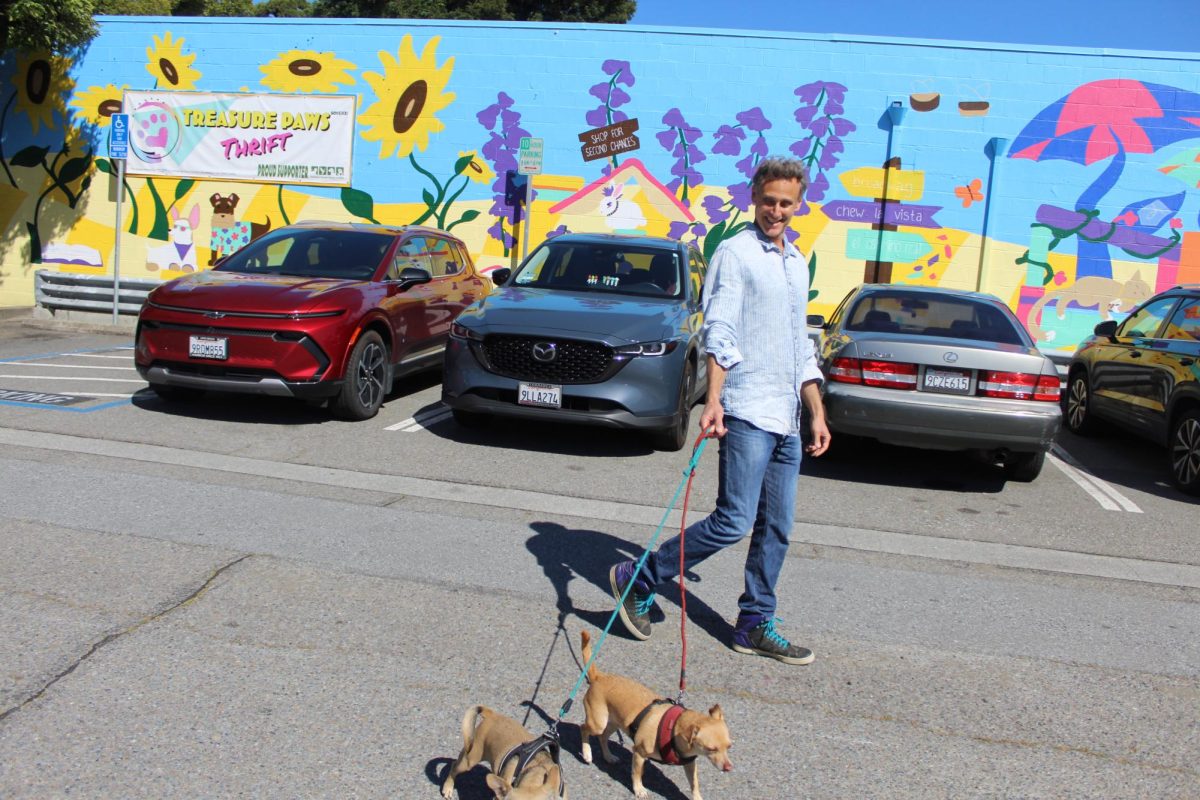



Skyline College’s Phi Theta Kappa (PTK) and Honor Societies held a beach cleanup event at Sharp Park Beach in collaboration with the Pacific Beach Coalition (PBC) on Saturday, Sept. 20.
The event was part of a broader series of beach cleanups along the Bay Area’s west coast organized by the PBC, held in honor of Coastal Cleanup Day. Students and organizers set up tables at the intersection between Pacifica’s Beach Boulevard and Clarendon road, the area around which the cleanup occurred. Volunteers scattered across the area, from the pier to the 7-Eleven along Clarendon road, picking up litter from the shore, roads, fields and little ponds within the cleanup zone.
Site Captain Nick Hewitt said the high student and volunteer turnout was a major accomplishment of Saturday’s cleanup.
“This was a bigger weekend than usual because of Coastal Cleanup Day, we received twice as many people than usual,” Hewitt said. “People seemed more willing to pick up disgusting things that they’d usually leave.”
Evan Horne, a student officer for PTK who helped organize the event, was content with Skyline’s presence at the cleanup.
“We got way more people here than I expected. We got 30 to 50 people from Skyline; honestly, it was great,” Horne said.
Horne talked about how the most common pollutant found along Sharp Park Beach during the cleanup was cigarette butts.
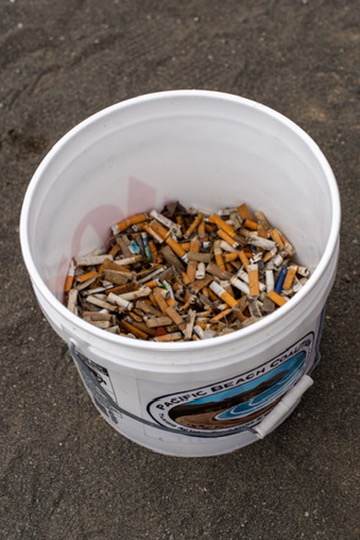
“By far at Sharp Park the most [trash] we encountered were cigarette-butts. Just alone, me, my friend Ali, and my friend Layla had one bucket [and] we collected 265 cigarettes alone, in maybe an hour and a half,” Horne said.
Common pollutants found along the beach also included plastic bottles, aluminum cans and ghost fishing gear. Though plastic or aluminum is an unwelcome addition to the ocean inhabitants, ghost fishing gear can entangle unsuspecting marine life in them, leading to injury or even death for the animal, making them an especially dangerous pollutant. Other oddities found during the cleanup included a crab trap, an old Coca-Cola bottle, and a stool.
Lee McHugh, an Honor Societies member and environmental science major noted how old some of the litter he found was.
“We were able to get into the pond where stuff had been there for years and there was a Monster can that looked like it had the old logo, it could’ve been well over 10 years old,” McHugh said. “One bottle, an aluminum can, looked like it was completely rotted inside out, wet [and] moist. But you could tell it was a can [that] must’ve been in there for years, covered in mud, you couldn’t recognize anything.”
Jana Hoffman, an acting site captain, said she felt hopeful that events like this would inspire incremental change within the local community.
“I’m hoping that people feel more empowered to come out and support their community, to pick up a piece of trash when they see it on the ground. Every little action has ripple effects,” Hoffman said. “When you see someone else doing it, it may inspire you to do it too.”