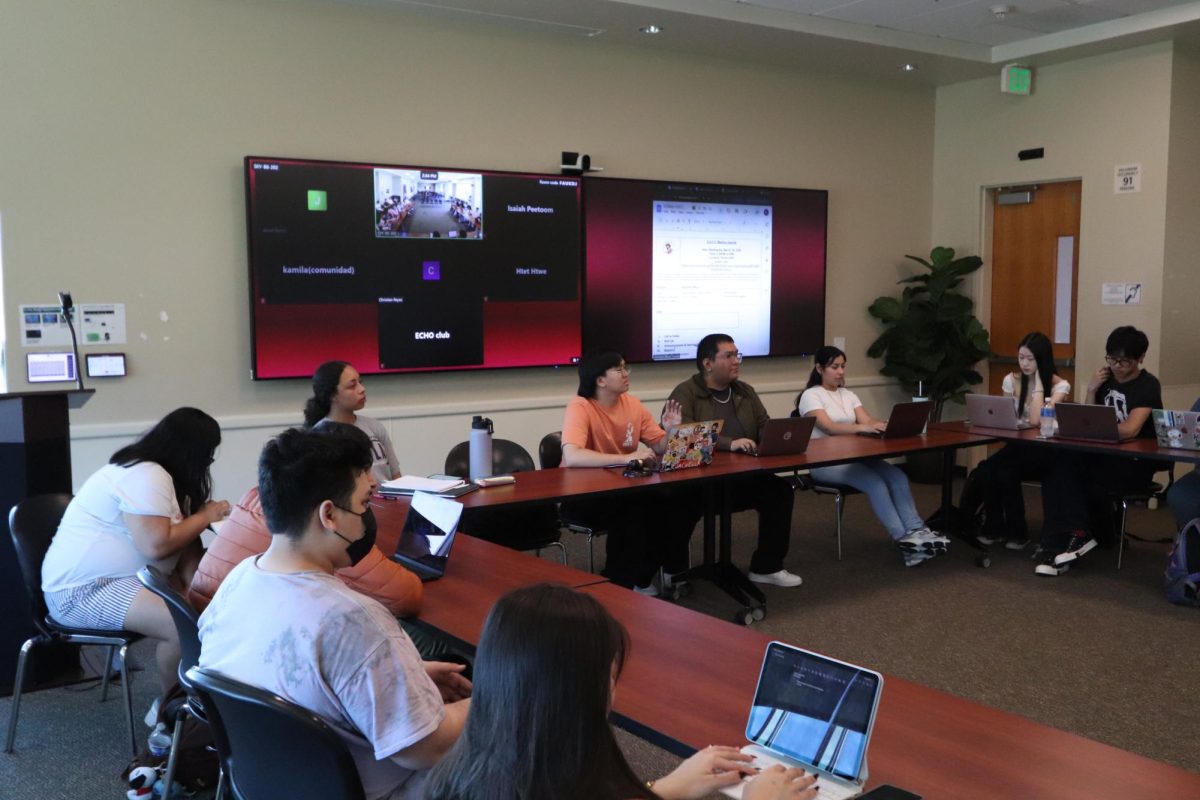
During a community forums meeting held at Skyline College on Wednesday, Sept. 3, the San Mateo County Community College District (SMCCCD) announced that College of San Mateo (CSM) will receive a 316-bed student housing facility, with plans in the works for Skyline College and Cañada College to also receive student housing, among many other renovations mentioned from the 2025 Facilities Master Plan Amendment (FMPA).
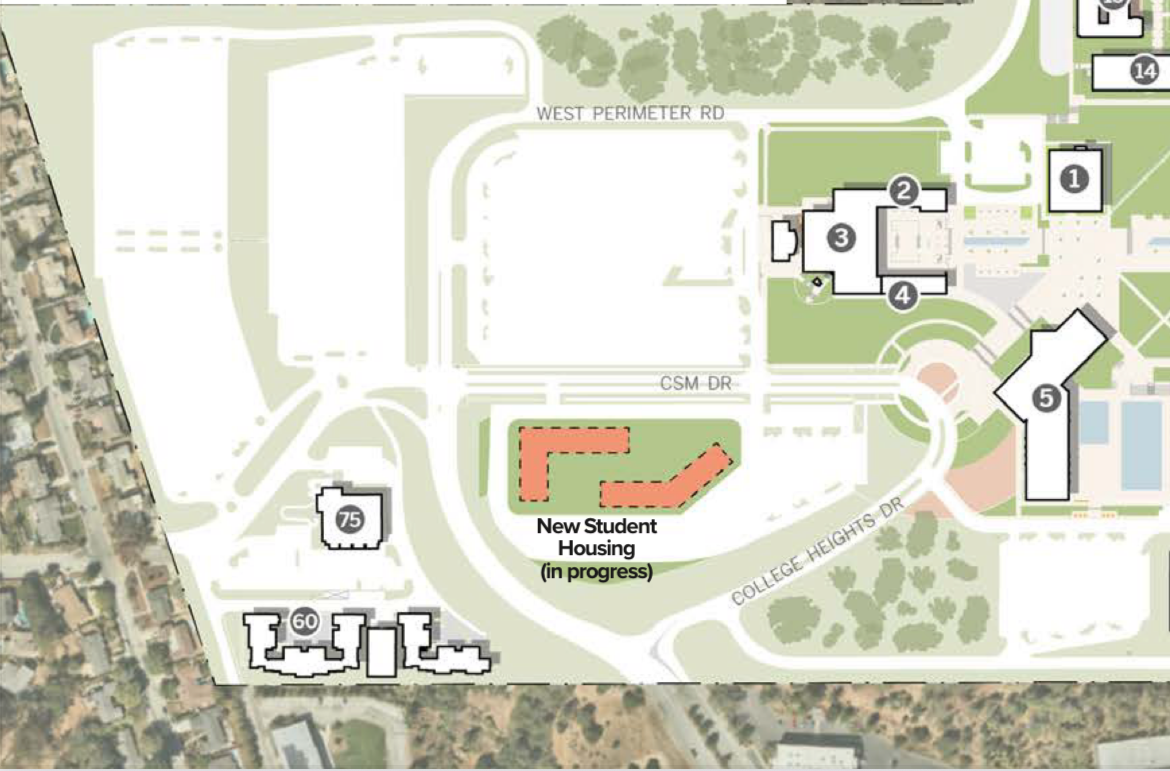
The SMCCCD will break ground on the project in January or February of 2026, with plans for completion in 2027. According to the FMPA, the student housing facility will be located in front of the campus, in the current parking lot along CSM Drive.
According to the SMCCCD website, the budget for the project is $86 million, with $56 million given from the state and $30 million received from the district funds. Students from each of the three SMCCCD campuses will have access to the housing, however, the housing will only be available for SMCCCD residents.
Executive Vice Chancellor of Administrative Services Richard Storti said in the meeting students will have to pay for the housing, with the goal being to provide students with a below-market monthly rent to make sure they stay on track to graduate.
“The idea is to keep the rents low, so students could afford it, and at CSM the lowest rent will be in the $500 range, and it will go all the way up to a little bit below $1000, depending on the room,” Storti said.
Storti also said, in order for students to be qualified for the housing, they must attend full-time and graduate within two years.
Director of Capital Projects Marie Mejia said in the meeting that the need for student housing has increased over the last few years due to the increasing rent around California, causing some students to waver off their path.
“Several years ago there was a recognition that a lot of students are choosing to go to community colleges first to save,” Mejia said. “But the increase of homelessness as well as the lack of affordable rents…meant that a lot of students were sleeping in cars or dropping out of their college paths because they did not have an affordable place to live.”
The facility will contain a common gathering area, group kitchens, laundry facilities, study areas, administration offices, along with a mixed distribution of shared bedrooms and studios to help the 58% of SMCCCD students who are housing insecure and the 6% who are homeless.
SMCCCD’s architectural consultant for the project, Suniya Malhotra of Suniya 360 Architects, said in the meeting the immediate goal of the housing for each of the three campuses is to make sure current students have the same equitable opportunities as students at other college campuses, and to intrigue future students to attend one of the colleges within the SMCCCD.
“The district feels strongly that each college should have access to housing, tutoring, wellness and community facilities that support enrollment, success and retention,” Malhotra said. “Without that parity, students will choose to go elsewhere, where those resources exist.”
Skyline and Cañada also applied for state assistance funding for student housing, but the state did not grant their request, which means Skyline and Cañada will have to reapply in 2026. However, upon receiving the proper funding, the SMCCCD plans on constructing a roughly 300-bed student housing facility at both campuses. Skyline’s student housing facility will be located in Lot L, the parking lot adjacent to Building 19, and the district has yet to finalize a location for Cañada’s student housing.
Another major project included for Skyline is a new Kinesiology and Wellness building that will house more area for the Kinesiology, Athletics, and Dance programs (KAD). The building will hold a second gym, a bigger weight room, wrestling room, dance studio, and team locker rooms. Plus, the facilities would be available to the community in an effort to provide it with an equitable opportunity for fitness and recreation, similar to residents around CSM.
In addition, SMCCCD is going to be modernizing a majority of the buildings throughout all three of the campuses to make sure students have the highest quality technology and connectivity they need. According to the FMPA, over a third of each campus has buildings that were built before the 1970s, with no upgrades in technology except for a few renovations.
Due to the high cost of construction in San Mateo County, these modernizations will be classified as “replacement modernizations,” because the average cost to modernize each building without tearing it down would exceed 75% of the replacement cost. This means modernizing the building from scratch would be far more cost effective than modifying the original building.
The SMCCCD’s FMPA is only a draft right now, and is open until the end of September for comment or suggestions. Between the end of September to October, revisions will be made; once the master plan is complete, it will be sent to the board for adoption on Oct. 15.